#1 trendingDaylight Saving Time
Daylight Saving Time Has Ended: Clocks Fell Back an Hour Overnight. Here's What to Know
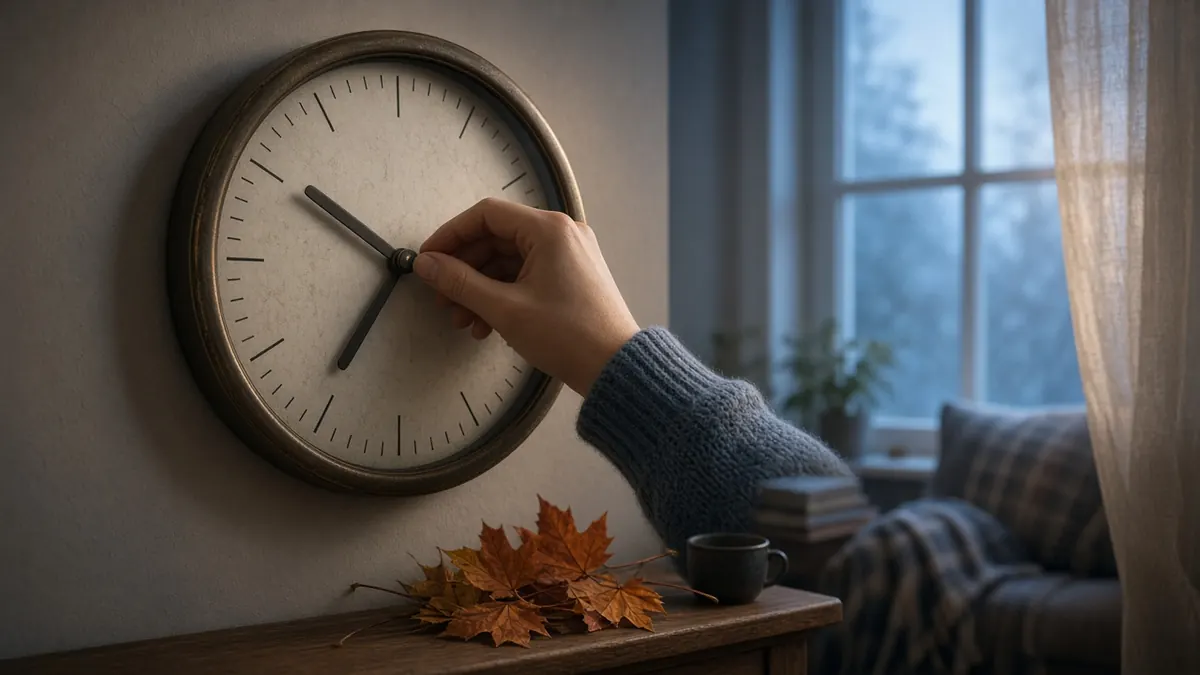
If your phone looks an hour off from the oven clock this morning, that’s why: daylight saving time ended at 2 a.m. local time on Sunday, Nov. 1, 2026. At that moment, clocks across most of the country “fell back” to 1 a.m., giving most Americans an extra hour of sleep, according to CBS News.
The country is now back on standard time until spring. Here’s what changed, who it didn’t affect and where the push to stop changing the clocks stands.
Did the time change last night?
Yes. The switch happened overnight from Saturday into Sunday, right after Halloween. Clocks went back one hour at 2 a.m. local time, which means the 1 o’clock hour happened twice.
Smartphones and other connected devices should have updated on their own if they’re set to adjust automatically, CBS News noted. Many appliances, car dashboards and wall clocks still need to be changed by hand.
Do we gain or lose an hour of sleep?
You gain one. The fall change gives back the hour lost when clocks “sprang forward” in March, CBS News reported. The trade-off is earlier darkness in the evening.
To show the effect, CBS cited National Weather Service times for Boston: on Saturday, the sun was set to rise at 7:16 a.m. and set at 5:39 p.m. On Sunday, back on standard time, sunrise is 6:17 a.m. and sunset is 4:37 p.m.
Why does daylight saving time end in November?
Since 2007, the U.S. has started daylight saving time on the second Sunday in March and ended it on the first Sunday in November. A 2005 law moved the end date from the last Sunday in October, according to CBS News.
The idea is to shift an hour of daylight from the morning to the evening during the longer days of spring and summer. The U.S. first adopted daylight saving time in 1918 during World War I to conserve fuel, CBS reported, citing the Congressional Research Service. Congress didn’t set a uniform national start and end until 1966.
Which states don’t change their clocks?
Daylight saving time is observed in every state except Hawaii and most of Arizona, CBS News reported. The Navajo Nation, which covers part of Arizona, does observe the change to stay in sync with its communities in New Mexico and Utah.
U.S. territories, including American Samoa, Guam, the Northern Mariana Islands, Puerto Rico and the U.S. Virgin Islands, also stay on standard time all year.
When does daylight saving time start again?
Clocks spring forward again at 2 a.m. local time on Sunday, March 14, 2027, according to CBS News. That’s a relatively late date because March 2027 begins on a Monday, which pushes the second Sunday back. In 2026, daylight saving time started on March 8.
Will daylight saving time become permanent?
Not yet, and probably not this year. The Sunshine Protection Act, which would make daylight saving time permanent, passed the House in July by a 308-117 vote, Spectrum News reported. But the Senate wasn’t expected to vote on it before this weekend’s change.
The bill has high-profile support. President Trump has pushed the Senate to act, writing on Truth Social on Oct. 26 that the Senate “is letting the Daylight Saving Bill die” and urging a vote, per Spectrum News. He also posted what he said was the cellphone number of Arkansas Sen. Tom Cotton, a Republican opponent of the bill, according to both outlets.
Cotton has argued that Congress tried permanent daylight saving time before and reversed course “once Americans experienced absurdly late sunrises in the winter.” Critics say some places wouldn’t see sunshine until around 9 a.m. in winter and raise concerns about children going to school in the dark.
Time is short. CBS News reported that the bill, like other pending legislation, expires in early January when the new Congress takes office. If it dies, the effort would have to start over in both chambers.
Nineteen states have already passed measures to adopt permanent daylight saving time if Congress allows it, Spectrum News reported, citing the National Conference of State Legislatures. Arizona and Hawaii are the only states that have chosen permanent standard time.
FAQ
What time did the clocks go back?
At 2 a.m. local time on Sunday, Nov. 1, clocks moved back to 1 a.m.
Do I need to change my phone’s clock?
Usually not. Phones set to update automatically should already show standard time.
When is the next time change?
Sunday, March 14, 2027, when clocks move forward one hour.
Is daylight saving time ending for good?
No. The Sunshine Protection Act passed the House but has not passed the Senate, so the twice-a-year change continues for now.
Earlier coverage: Halloween on a Saturday Won't Happen Again Until 2037, and Clocks Fall Back Tonight (Oct 31)
Related topics
- Daylight savings 2026
- Time change 2026
- What time does the time change
- When does daylight savings time end
- Do we get an extra hour of sleep tonight
- Did daylight savings happen
- Does the time change tonight
- When do we set the clocks back
- Daylight saving time 2026
- Clocks go back
- Did the time change
- Time change tonight