#18 trendingHalloween and Time Change
Halloween on a Saturday Won't Happen Again Until 2037, and Clocks Fall Back Tonight
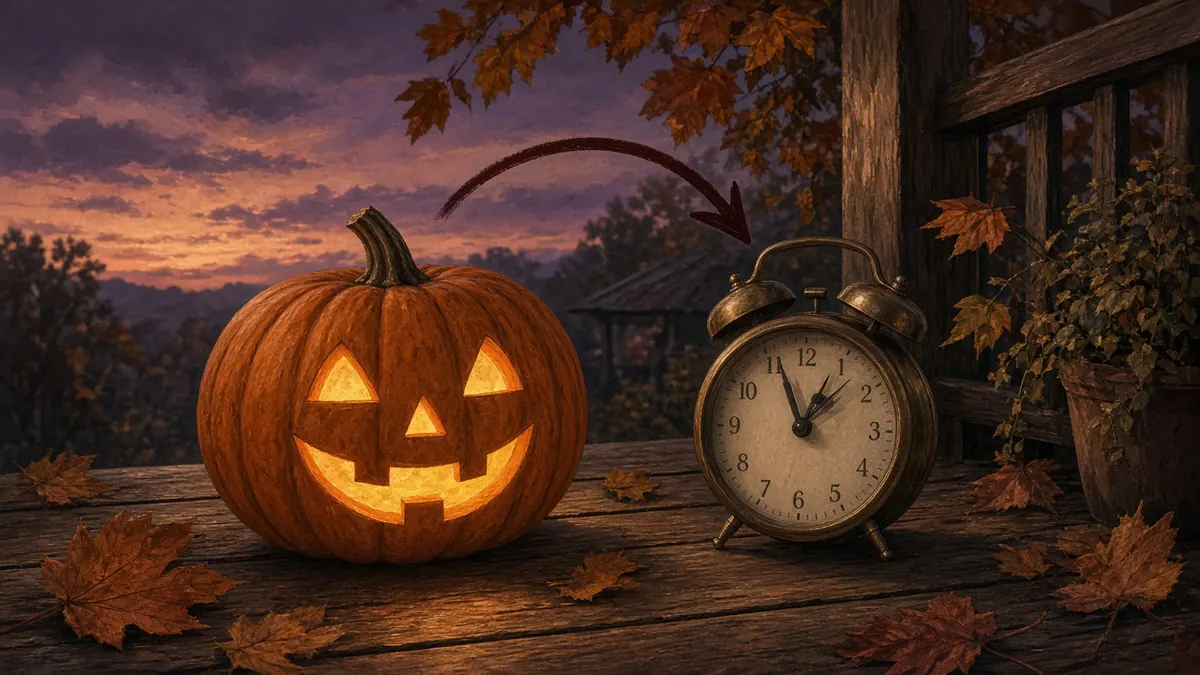
Halloween 2026 falls on a Saturday, a rare treat for trick-or-treaters and party hosts alike. It also lines up with the end of daylight saving time: clocks across most of the country fall back one hour early Sunday, Nov. 1. As CBS News put it, that gives revelers an extra hour of late-night costume parties, or an extra hour of sleep.
Here is when Halloween lands on a Saturday again, and what to know about the time change.
When is the next time Halloween will be on a Saturday?
Not for more than a decade. After 2026, Oct. 31 next falls on a Saturday in 2037, according to WBBH and standard calendars. A weekday calculation confirms it: Halloween lands on a Saturday in 2026, then again in 2037 and 2043.
The gap is uneven because of leap years. The calendar date usually moves forward one weekday each year and two in a leap year, so the stretch between Saturday Halloweens can run five, six or 11 years. Before this year, the most recent Saturday Halloweens were in 2015 and 2020.
When does daylight saving time end in 2026?
Daylight saving time officially ends at 2 a.m. local time on Sunday, Nov. 1, CBS News reported. At that moment, clocks jump from 1:59 a.m. back to 1 a.m., according to NBC News.
Since 2007, daylight saving time has started on the second Sunday in March and ended on the first Sunday in November, NBC News reported, citing the U.S. Naval Observatory’s Astronomical Applications Department. A 2005 law moved the end date from the last Sunday of October, CBS News noted. This year, daylight saving time began on March 8.
Do we gain or lose an hour when we fall back?
You gain an hour. Most Americans get an extra hour when daylight saving time ends, making up for the hour lost when clocks “sprang forward” in March, CBS News reported. Unlike the spring change, which skips the 2 o’clock hour entirely, the fall change repeats the 1 o’clock hour.
The trade-off: the sun will start setting earlier across the United States as the country heads into late fall and winter, NBC News noted.
When do we set the clocks back, and which ones change on their own?
The official switch happens at 2 a.m. Sunday, so many people simply set their clocks back one hour before going to bed Saturday night. Smartphones update automatically, Axios noted, while many appliances such as ovens, microwaves and car dashboards need a manual reset.
If you wake up Sunday wondering whether the time changed last night, check your phone, which should already show standard time.
Which states don’t observe daylight saving time?
Hawaii and most of Arizona don’t observe daylight saving time, so their clocks won’t change, according to Axios. Most of the rest of the country falls back.
Is permanent daylight saving time happening?
Not yet. In July, the House passed the Sunshine Protection Act, which would make daylight saving time permanent, leading to later sunrises and sunsets in winter, Axios reported. The bill would also let states opt out of daylight saving time altogether before the law takes effect, according to CBS News.
The legislation has stalled in the Senate. Axios reported that Sen. Tom Cotton, an Arkansas Republican, has emerged as a leading opponent. President Donald Trump, who supports the bill, accused Cotton of holding it up, CBS News reported. Cotton responded that Congress tried permanent daylight saving time before, only to return to the twice-yearly change “once Americans experienced absurdly late sunrises in the winter.”
The bill is not expected to be considered by the end of the year, Axios said, and pending bills expire in early January when the new Congress takes office, according to CBS News. If it dies, the effort would have to start over.
Many health and sleep experts oppose permanent daylight saving time, citing risks to health and safety, NBC News reported. NBC News also noted that 19 states have passed bills or resolutions for year-round time in the last seven years, according to the National Conference of State Legislatures, but those states need Congress to act first.
When does daylight saving time start again?
Unless Congress changes the law, clocks spring forward again on Sunday, March 14, 2027, according to Axios and NBC News. Daylight saving time will then end on Nov. 7, 2027, NBC News reported.
FAQ
What time do the clocks change tonight?
At 2 a.m. local time Sunday, Nov. 1, clocks go back to 1 a.m.
Is Halloween 2026 on a Saturday?
Yes. Oct. 31, 2026, is a Saturday. The next Saturday Halloween is in 2037.
Does Arizona change its clocks?
Most of Arizona does not observe daylight saving time, and neither does Hawaii, so their clocks stay the same.
Related topics
- When is the next saturday Halloween
- Daylight savings time ends
- When does the time change
- Time change 2026
- When do we set the clocks back
- Do we gain or lose an hour
- Fall back
- Permanent daylight savings time
- When do clocks fall back 2026
- Did the time change last night
- When does daylight savings time start
- Clock change
Sources
- Daylight saving time 2026 ends tonight. Here's what time the clocks change and more key details. — CBS News
- Daylight saving time ends Sunday as clocks 'fall back': Here's what to know — NBC News
- Clocks are still falling back despite Trump's daylight saving push — Axios
- Halloween falls on a Saturday in 2026, and the next one far away — WBBH