Peru Earthquake
Peru Earthquake: Magnitude 6.7 Quake in Junín Shakes Lima, Damages Homes and Blocks Andean Roads
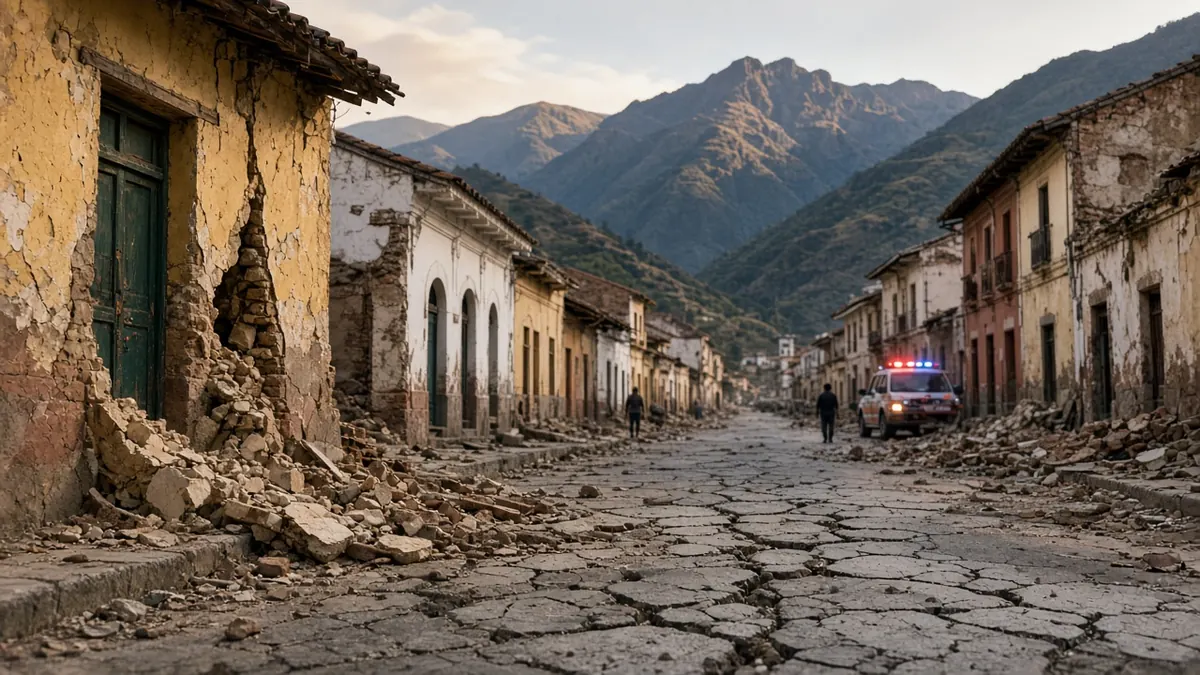
A strong earthquake struck central Peru on Friday evening, Nov. 20, shaking homes and high-rise buildings as far away as Lima and sending families into the streets. Peru’s Geophysical Institute (IGP) measured it at magnitude 6.7, centered about 30 kilometers (19 miles) northwest of the town of Junín, in the Andean region of the same name, at 7:09 p.m. local time, which was also 7:09 p.m. ET.
Because the quake started very deep underground, about 129 kilometers (80 miles) down, damage near the surface was limited for a quake of its size. Peru’s civil defense agency has reported at least 39 damaged homes, damage at a hospital and a university, power outages and rockfalls on mountain highways. One young woman was injured in Lima, according to the latest government tally reported by DW. Authorities ruled out a tsunami.
What happened
The quake hit just after nightfall. According to the state news agency Andina, residents in Lima and neighboring Callao described a prolonged, intense shaking, with walls that “rumbled.” Families left their buildings carrying young children and pets, elderly residents were helped outside, and many people crowded squares and avenues while trying to reach relatives by phone. Reports from Chanchamayo and Oxapampa, closer to the epicenter, said the shaking was felt very strongly there.
The quake was also felt in neighboring countries. DW, citing EFE and AFP, reported that the waves reached as far as Bogotá in Colombia and Quito in Ecuador. DW explained the reason: a deep quake loses much of its destructive power by the time its energy reaches the surface, but its waves spread over a much wider area.
According to the IGP, as reported by Infobae, the intensity reached V on the Modified Mercalli scale in Junín, and the quake was felt in cities across central Peru.
Magnitude: 6.7 or 6.9?
Early numbers varied. The U.S. National Tsunami Warning Center’s first information statement, issued at 4:18 p.m. PST, listed a preliminary magnitude 6.9 in central Peru at a depth of 88 miles, and noted that the parameters could change. Peru’s IGP, the official agency, put it at magnitude 6.7 at 129 kilometers deep, and that is the figure Peruvian authorities and most news reports are using.
Damage reported so far
Damage reports came from four regions, Infobae reported, citing Indeci chief Luis Vásquez Guerrero in an interview with the channel Canal N:
- Junín: The first floor of the hospital in Pichanaqui was damaged, with cracks in the ceiling and debris on the floor shown in regional government photos. A wall also came down at a home there. In Chanchamayo, facilities of the Universidad Peruana Los Andes were affected, and the district of San Luis de Shuaro lost power.
- Huánuco: A church in the district of Tomayquichua, in Ambo province, was damaged.
- Pasco: The district of Chaupimarca lost electricity.
- Lima and Callao: Rocks fell from the cliffs along the Costa Verde near Miraflores, and some stone walls built with rocks and tires collapsed in Independencia. Possible damage to homes in Mi Perú, in Callao, was being checked.
A later count reported by DW put the number of affected homes at at least 39, with cracks and other damage: 20 in San Pedro de Cajas, 14 in Ulcumayo, four in Ticlacayán and one in Pichanaki.
Roads blocked by rockfalls
Mountain highways took a hit. According to Infobae, traffic was restricted on the Tarma–San Ramón road, which a video showed was impassable after a large rockslide, and falling stones made the Lima–Huancayo route difficult to travel. One vehicle was stopped on the Carretera Central by debris, with no injuries reported. The roads agency Provías sent machinery to clear the routes.
Injuries: conflicting early reports
Early reports and later ones differ. Andina, writing shortly after the quake, said no injuries had been reported, and Infobae quoted Vásquez as saying no one had been hurt as of his TV interview. Later, DW reported that the Lima municipality said a young woman was hit in the head by a piece of concrete that fell from a building in the capital’s historic center.
Defense Minister Rafael Belaúnde said that apart from infrastructure damage, there were no reports “of major damage or harm to life or serious injuries,” but that the situation “is in continuous progress and constant evaluation,” according to DW (translated from Spanish). Officials said assessments were continuing, especially in remote areas where information takes longer to reach authorities.
Is there a tsunami threat?
No. Peru’s Navy Hydrography and Navigation Directorate said the quake would not generate a tsunami on the Peruvian coast, Andina reported. The U.S. National Tsunami Warning Center said there was no tsunami danger for the U.S. West Coast, British Columbia or Alaska and that, based on the quake’s depth, a tsunami was not expected.
Why it matters
A magnitude 6.7 quake is large enough to cause serious harm, and DW noted that the epicenter was in a rural, sparsely populated area. This one’s depth spared the region from much worse damage, but it still knocked out power, cracked buildings and cut off key Andean roads that connect Lima with the central highlands. The final damage count may rise as inspectors reach rural towns near the epicenter.
What to do during an earthquake
Andina shared official guidance:
- Stay calm and keep away from windows, mirrors, glass and anything that could fall on you.
- If you can’t leave, take shelter under a table or another solid structure.
- Don’t use elevators.
- After the shaking stops, evacuate in an orderly way using emergency stairways.
Vásquez also urged families to keep an emergency backpack ready and to have a household emergency plan with safe zones and evacuation routes, Infobae reported. He reminded the public that earthquakes cannot be predicted.
FAQ
Where was the Peru earthquake?
About 30 kilometers northwest of Junín, in central Peru’s Junín region, at a depth of about 129 kilometers, according to the IGP.
How strong was it?
Magnitude 6.7, per Peru’s IGP. A U.S. preliminary estimate first listed 6.9.
Was anyone hurt?
One young woman was injured in Lima by falling concrete, DW reported. Defense Minister Rafael Belaúnde said no loss of life or serious injuries had been reported.
Is there a tsunami warning?
No. Peruvian and U.S. authorities said no tsunami was expected.
Sources
- Peru: 6.7-magnitude earthquake in Junín shook homes, buildings in Lima and Callao — Andina
- Sismo de 6,7 en Junín: Indeci reporta daños en cuatro regiones, afectaciones en un hospital y carreteras bloqueadas por rocas — Infobae
- Fuerte sismo en Perú deja viviendas dañadas y una persona herida — DW
- Tsunami Information Statement Number 1 — NWS National Tsunami Warning Center