#14 trending100K+ searchesToledo Chemical Leak
Toledo chemical leak: evacuation zone cut to half a mile, shelter-in-place lifted after glycidyl methacrylate release
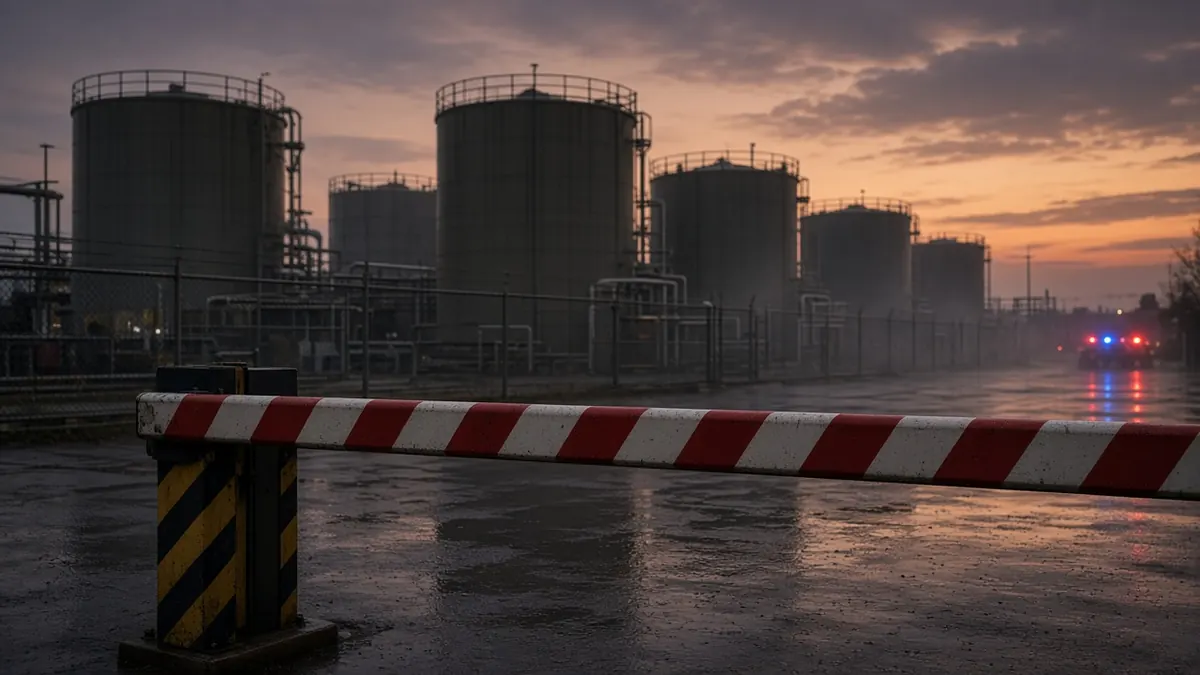
A chemical release from a damaged tank in North Toledo, Ohio, forced an overnight evacuation and a 3-mile shelter-in-place order before officials scaled both back on Wednesday evening. As of the City of Toledo’s last update (8:05 p.m. ET Wednesday, Oct. 21), the evacuation zone has been reduced to a half-mile radius around 1266 Progress Ave. and the shelter-in-place order has been lifted.
The incident made “toledo chemical leak” one of the most-searched topics in the US, with more than 100,000 Google searches, as people looked up the chemical involved, glycidyl methacrylate, along with evacuation maps, school closings and air quality.
What happened on Progress Avenue
According to the U.S. Environmental Protection Agency, Toledo Fire & Rescue responded around 10 p.m. on Tuesday, Oct. 20, to a release of glycidyl methacrylate from an intermodal tank of roughly 5,500 gallons near 1266 Progress Ave. WTVG (13abc) reported crews first responded just before 9:30 p.m.; the city’s timeline begins with the evacuation order at 10:48 p.m.
The timeline, per the City of Toledo and the EPA:
- 10:48 p.m. Tuesday: Toledo Fire & Rescue orders everyone within 1 mile of the site to evacuate.
- 2:30 a.m. Wednesday: EPA arrives on scene after being asked to help around midnight.
- 4:24 a.m. Wednesday: A 3-mile shelter-in-place order is added.
- Around 6 a.m.: EPA begins mobile air monitoring at the edge of the evacuation zone.
- 5 p.m. Wednesday: The evacuation zone is cut to half a mile and shelter-in-place is lifted.
The EPA said Wednesday morning that the fire department’s attempts to contain the release were unsuccessful, the tank had been compromised and the chemical inside was completing a reaction. The city decided the safest course was to let that reaction finish, and WTVG reported officials warned the release could continue for several more hours.
Who is responsible: MC Tank, not Sterling Pipe & Tube
City officials initially identified the source as Sterling Pipe & Tube, but later clarified that it came from MC Tank Transport Inc., WTVG reported. In a statement carried by the station, MC Tank Transport, a subsidiary of The Kenan Advantage Group, confirmed its equipment was involved and said it was working with the Red Cross on emergency lodging and transportation for displaced residents. The EPA said the material came from a tank due to an error during a transfer, according to WTVG. An official cause has not been detailed beyond that.
What is glycidyl methacrylate?
The company described glycidyl methacrylate as an industrial chemical used to make certain plastics, paints and coatings perform better. The city calls it an irritant that can cause burning of the eyes, nose, mouth and skin, and lists symptoms of overexposure as headache, dizziness, tiredness, nausea and vomiting. WTVG, citing health officials, reported it is also considered a long-term carcinogen, and the EPA notes it has a strong odor, so people are likely to smell it before it reaches hazardous levels.
This article is general information, not medical advice. If you think you have been exposed, follow official guidance and contact a medical professional.
Health and safety guidance
The city’s guidance for residents includes:
- Minor symptoms such as mild eye, nose, throat or skin irritation: shower or rinse the affected area and contact a medical professional.
- Serious symptoms such as difficulty breathing, vomiting, dizziness or confusion: go to the emergency room or call 911.
- Unusual odor outside the zones: stay indoors, close windows and doors, and turn off ventilation that draws in outside air.
- Tap water is safe, the city says; the water source was not contaminated.
- Driving through: the interstate stayed open; keep windows up and recirculate air. Roads around the evacuation area remain closed.
Fog and very light wind across Toledo complicated things, and the city warned that people cannot tell fog from the release by looking at it. The Toledo-Lucas County Health Department (419-213-4100) is fielding health questions.
Air quality monitoring
The EPA said it has five on-scene coordinators at the site, four stationary air monitoring locations and three air sampling locations, plus roving monitoring along the evacuation perimeter. It plans to deploy its mobile air lab, known as TAGA, later this week, and says it will post data as it becomes available.
Injuries, shelters and school closings
At a Wednesday briefing, officials said one sheriff’s deputy went to the hospital to be checked out and his condition was not serious, WTVG reported; no other injuries or deaths were reported. Shoreland Elementary School (5650 Suder Ave.) is serving as a temporary shelter.
Toledo Public Schools and Washington Local Schools canceled classes on Wednesday. Decisions for Thursday had not been confirmed in the sources we reviewed, so check your district’s announcements. The city said its own services return to normal on Thursday, Oct. 22.
FAQ
Is the Toledo evacuation still in effect? Yes, for a half-mile radius around 1266 Progress Ave., as of Wednesday evening.
Is the shelter-in-place lifted? Yes, since 5 p.m. Wednesday.
What chemical leaked in Toledo? Glycidyl methacrylate, an industrial chemical used in plastics, paints and coatings.
Is Toledo tap water safe? The city says yes.
Earlier coverage: Toledo chemical leak: What is glycidyl methacrylate, and how long will the evacuation last? (Oct 21)
People also searched
Sources
- Hazardous Materials Evacuation Orders in Effect for North Toledo — City of Toledo
- Toledo Glycidyl Methacrylate Release: site profile and updates — U.S. EPA
- TFRD announces reduced evacuation zone, end to shelter-in-place order after chemical release — WTVG 13abc
- Public Health Advisory: Glycidyl Methacrylate (GMA) Chemical Release in Toledo — Toledo-Lucas County Health Department