#19 trendingEagle's Nest
Fire nearly destroys Eagle's Nest, the Kehlsteinhaus built for Hitler in the Bavarian Alps; suspect detained
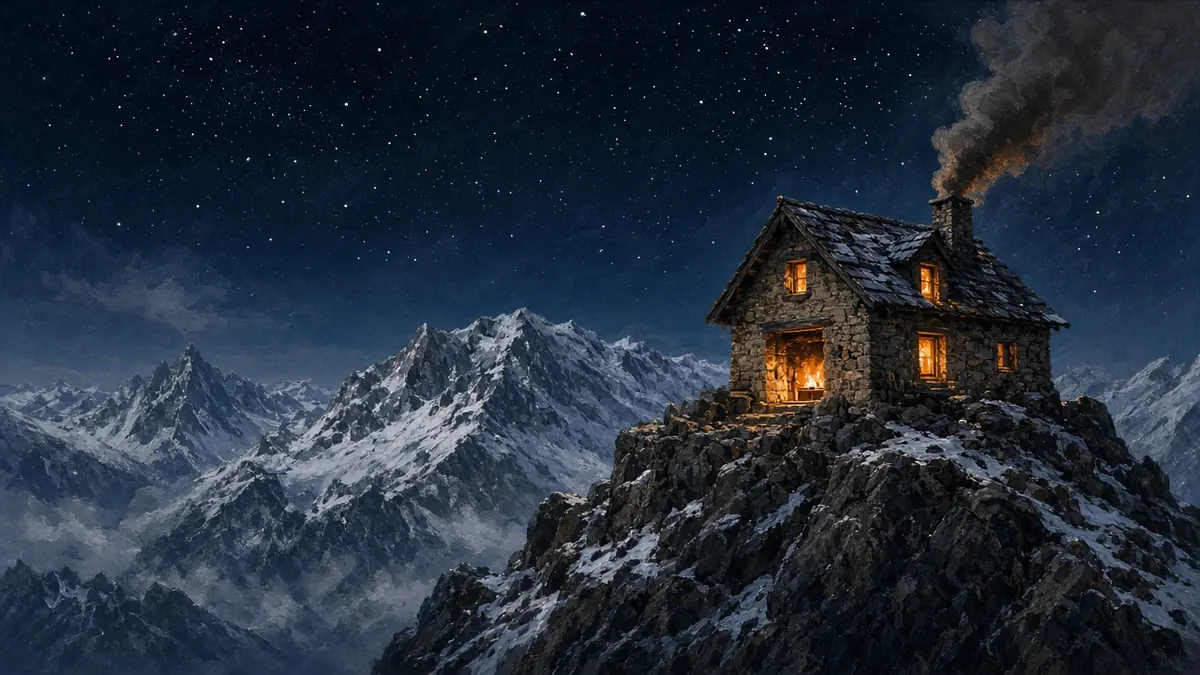
A fire tore through the Kehlsteinhaus, the mountaintop building in the Bavarian Alps known in English as the Eagle’s Nest, late Friday, Oct. 23, leaving the Nazi-era structure largely destroyed. Police detained a 33-year-old German man near the scene, and prosecutors suspect arson.
No injuries were reported, BBC News said, and German broadcaster tagesschau reported that, as far as investigators know, no one was inside. The site above the town of Berchtesgaden is closed until further notice.
What happened at the Eagle’s Nest in Germany?
Dispatchers in Traunstein received a fire alarm from the building at 9:15 p.m. local time on Friday (3:15 p.m. ET), and firefighters found it engulfed in flames, BBC News reported. Police told tagesschau that the first emergency crews reached the mountain inn, which sits more than 1,800 meters (about 5,900 feet) up, at 9:52 p.m.
Fighting the blaze was extremely difficult. Rain, snow and the difficult road up hampered crews, tagesschau reported. Around 200 firefighters and emergency workers were deployed, and the building was still burning and smoldering into Saturday morning.
How badly the building is damaged is still being assessed. Tagesschau described it as almost completely destroyed, and the BBC cited local media calling it “largely destroyed.” Bavarian Interior Minister Joachim Herrmann said fire experts still need to determine the exact extent of the damage, according to tagesschau.
Who is the suspect in the Eagle’s Nest fire?
Police said they stopped the suspect on a motorcycle near the scene. According to tagesschau, he was coming down the narrow, steep Kehlstein road toward the arriving emergency crews, and Herrmann said it had not been easy to stop him. The German news agency dpa reported that the man also tried to flee on his motorcycle, according to the Schwäbische Zeitung.
At a press conference in Berchtesgaden, prosecutor Rainer Vietze of the Traunstein prosecutor’s office said “concrete indications of possible mental illness” had emerged, based on a brief psychiatric assessment by an expert (translated from German). The man was brought before an investigating judge in Rosenheim on Saturday, with prosecutors seeking his placement in a forensic psychiatric facility. Vietze said authorities must assume at least diminished criminal responsibility.
A possible political motive is also being examined, but Vietze said investigators were only at the very beginning of that work. Local police official Gerhart Holzinger told reporters there was currently no evidence of any further suspects, the BBC reported.
The suspect has not been publicly named, and no court has ruled on the case.
Will the Kehlsteinhaus be rebuilt?
Bavarian officials say yes. Herrmann said the historically significant building, visited by tens of thousands of people every year, should be rebuilt, tagesschau reported. Accounts of his exact words differ slightly in translation: the BBC, citing broadcaster BR24, quoted him as saying the site would “under no circumstances remain a ruin,” while tagesschau quoted him in German as saying, roughly, that officials could hardly leave a ruin standing there.
“It is important that we continue our work of remembrance,” Herrmann said, according to the BBC.
The official Kehlsteinhaus website says that because of the severe fire, the building and all visitor operations, including the bus shuttle and the elevator, are completely closed until further notice. The site had been scheduled to stay open for the season until Nov. 8, according to tagesschau.
What is Hitler’s Eagle’s Nest?
The Kehlsteinhaus was built in 1937-38 inside a sealed-off residential and government compound for the Nazi leadership on the Obersalzberg, tagesschau reported. The Allies dubbed it the Eagle’s Nest. In the Nazi era it was known as the “Teehaus,” or tea house, and was intended as a place for political receptions away from the public. Adolf Hitler received diplomats and other foreign guests there, though the operator’s website says the building’s actual importance remained small.
It was one of several buildings in the area used by Hitler and his entourage during World War II, the BBC noted. Hitler and senior Nazi officials used his nearby Berghof residence to plan the 1941 invasion of the Soviet Union, and the whole complex was considered one of his headquarters.
The Eagle’s Nest escaped destruction after Germany’s defeat in 1945 and has operated as a mountain inn since 1952, with an exhibition on the building’s history. Its official website describes it as “a cautionary reminder of the abysses of the inhumane Nazi dictatorship,” the BBC reported.
Why the fire matters
The blaze lands in the middle of a long-running debate in Germany and Austria over what to do with buildings linked to Hitler, the BBC noted. Some argue they should be preserved for their historical value; others worry they could become pilgrimage sites for neo-Nazis and far-right extremists. In June, Berlin authorities announced plans to tear down one of Hitler’s bunkers, and in July, Austrian authorities turned the house in Braunau am Inn where Hitler was born into a police station after years of controversy.
FAQ
Was anyone hurt in the Eagle’s Nest fire?
No injuries were reported, and investigators believe no one was inside when the fire started.
What caused the fire at the Kehlsteinhaus?
Prosecutors suspect arson and detained a 33-year-old man. The investigation is ongoing, and a possible political motive is still being examined.
Is the Eagle’s Nest open to visitors?
No. The official website says the building, bus shuttle and elevator are closed until further notice.
Related topics
Sources
- Arrest made after fire at Hitler's mountaintop Eagle's Nest retreat — BBC News
- Brand in Hitlers "Teehaus" Kehlsteinhaus am Obersalzberg fast vollständig zerstört — tagesschau.de
- Mutmaßlicher Brandstifter wohl psychisch krank — Schwäbische Zeitung (dpa)
- The Eagle's Nest today – a legacy of recent history — Kehlsteinhaus (official site)