Cybertruck
Why Tesla Is Pulling the Plug on the Cybertruck: Weak Sales, Recalls and a Robotaxi Bet
This article summarizes news reporting and is not investment advice.
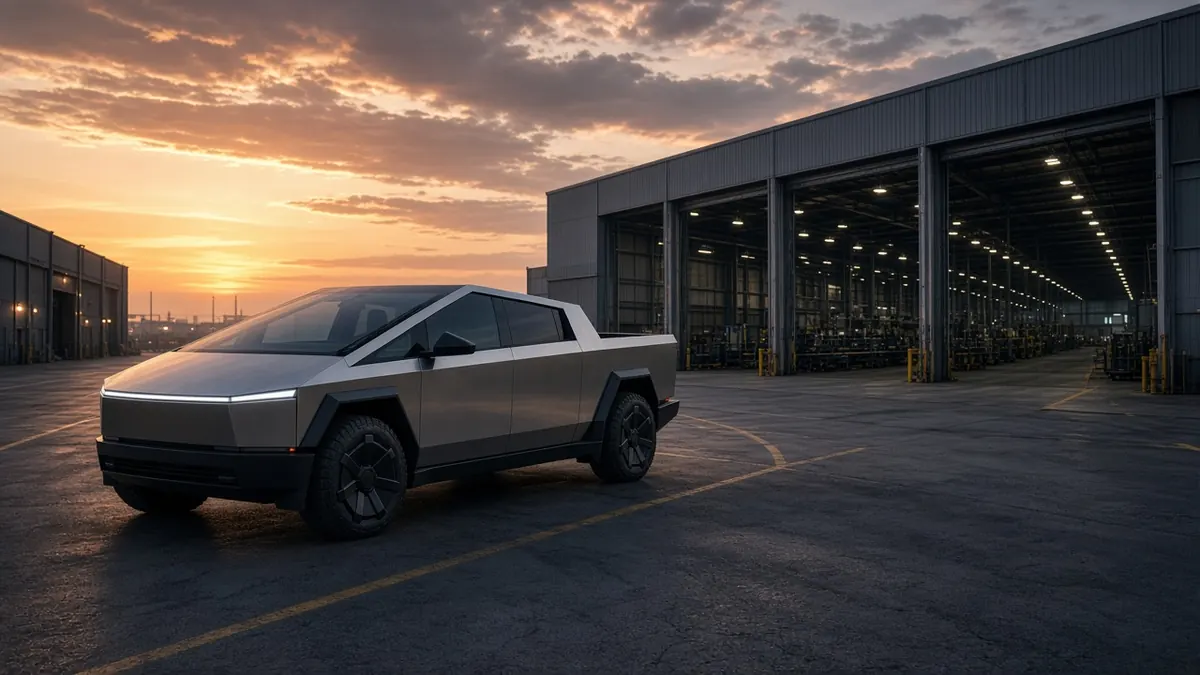
Elon Musk confirmed Friday that Tesla will wind down Cybertruck production around mid-2027. That leaves the obvious question: how did one of the most hyped vehicle launches in years end this way? Reporting from the AP and Reuters points to three things: sales that never came close to Musk’s targets, a long run of problems and backlash, and Tesla’s shift toward robotaxis.
Musk announced the move in what the AP called a “curt post” on X. He said production “will be winding down” at Tesla’s plant outside Austin, Texas, to make room for more production of the Cybercab robotaxi.
Is the Cybertruck being discontinued?
Yes, according to Musk’s post. Production is set to wind down around the middle of 2027. Reuters reported it was not immediately clear whether production would move elsewhere or end entirely. However, the Austin plant is the only known Tesla facility equipped to build the Cybertruck’s specialized parts.
Musk, replying to a user on X, called the truck the “best vehicle Tesla has ever made” and the decision the “end of an era,” Reuters reported.
Cybertruck sales vs. Musk’s promises
The numbers explain a lot of the story:
| Measure | Figure |
|---|---|
| Musk’s predicted annual sales (around 2023 launch) | 250,000 |
| U.S. sales in 2024 (Kelley Blue Book) | 38,965 |
| U.S. sales in 2025 (Kelley Blue Book) | 20,237, down 48% |
| 2026 sales through September | Down another 28%, per the AP |
| Recalls since late-2023 launch (NHTSA, via Reuters) | 11 |
Reuters also reported that Musk’s own SpaceX was one of the truck’s biggest customers last year. According to its IPO filing, it bought Cybertrucks worth $131 million at list price in 2025.
The price also moved far from the original pitch. The AP reported that Musk promised a price under $40,000, but early trucks sold for “double or more.”
What went wrong for the Cybertruck?
A rocky start. At the 2019 unveiling, a Tesla designer threw a metal ball at the truck’s supposedly unbreakable windows, and two of them cracked.
A tough market. Analyst Felipe Munoz told Reuters that electric pickups from Ford and others have also struggled in the U.S. because “electric pickups aren’t popular” there. The Cybertruck’s sharp stainless-steel design also kept it out of Europe, where pedestrian-impact crash rules applied. “Anywhere where you have crash regulation that takes into account pedestrian impact, that Cybertruck won’t go, can’t go,” former Aston Martin CEO Andy Palmer told Reuters.
Politics. The AP reported that Musk’s alliance with President Donald Trump and other right-wing figures drove away some buyers. It also described protests at Tesla showrooms and vandalism against Tesla vehicles and charging stations. Some Cybertruck owners said they were harassed.
How are owners reacting?
The AP spoke with Colorado owner Ross Blankenship, who said he was drawn in by the truck’s futuristic look. He said he hated seeing it become a political symbol and called its end “a sad moment.” He also said he would buy another one “in a heartbeat.”
Former Tesla executive Spencer Penn, who once reserved a Cybertruck, told the AP: “Some of these bets work and some of these bets don’t.”
What happens to the Cybercab?
The Cybercab is a two-seat robotaxi with butterfly doors and no steering wheel or pedals. Reuters reported that Tesla began offering paid rides in a small Cybercab fleet in Austin in September. About 570 of the more than 1,200 Tesla robotaxis operating in Texas are Cybercabs, according to state DMV data cited by Reuters.
“Cybertruck was an incredible technology development platform and lives on through Cybercab,” Cybertruck lead engineer Wes Morrill said, according to Reuters.
Questions remain. Reuters noted that the National Highway Traffic Safety Administration opened an audit in September into how Tesla self-certified that the Cybercab meets federal safety standards.
Why it matters
Reuters called the decision a major retreat from one of Musk’s pet projects. It also came during a rough week for him. Reuters reported that his nearly half-billion dollars in midterm spending produced few wins and that his companies were on track to lose more than $180 billion in combined market value for the week.
FAQ
When will Tesla stop making the Cybertruck?
Musk said production will wind down around mid-2027 at Tesla’s Texas factory.
Why is Tesla discontinuing the Cybertruck?
Musk said the move frees up capacity for the Cybercab. Reporting also points to weak sales: U.S. sales fell to about 20,000 in 2025, far below the 250,000-a-year goal.
Can you still buy a Cybertruck?
Production continues until the wind-down in 2027. Tesla has not announced an exact final build date.
What is the Cybercab?
It is Tesla’s two-seat robotaxi with no steering wheel or pedals, now operating in a small paid fleet in Austin.
Earlier coverage: Tesla to Wind Down Cybertruck Production Mid-2027 for Cybercab, Musk Says (Nov 6)
Related topics
Sources
- Tesla's Cybertruck heads for an exit after years of hype and division — AP (via ABC News)
- Tesla to axe Cybertruck after years of poor sales, Elon Musk says — Reuters (via ABC News Australia)
- Musk: Tesla to wind down Cybertruck production in Texas next year — CNBC