#12 trendingBrazil Election: Lula vs. Bolsonaro
Lula wins Brazil election for a fourth term as Flávio Bolsonaro refuses to concede and vows to seek annulment
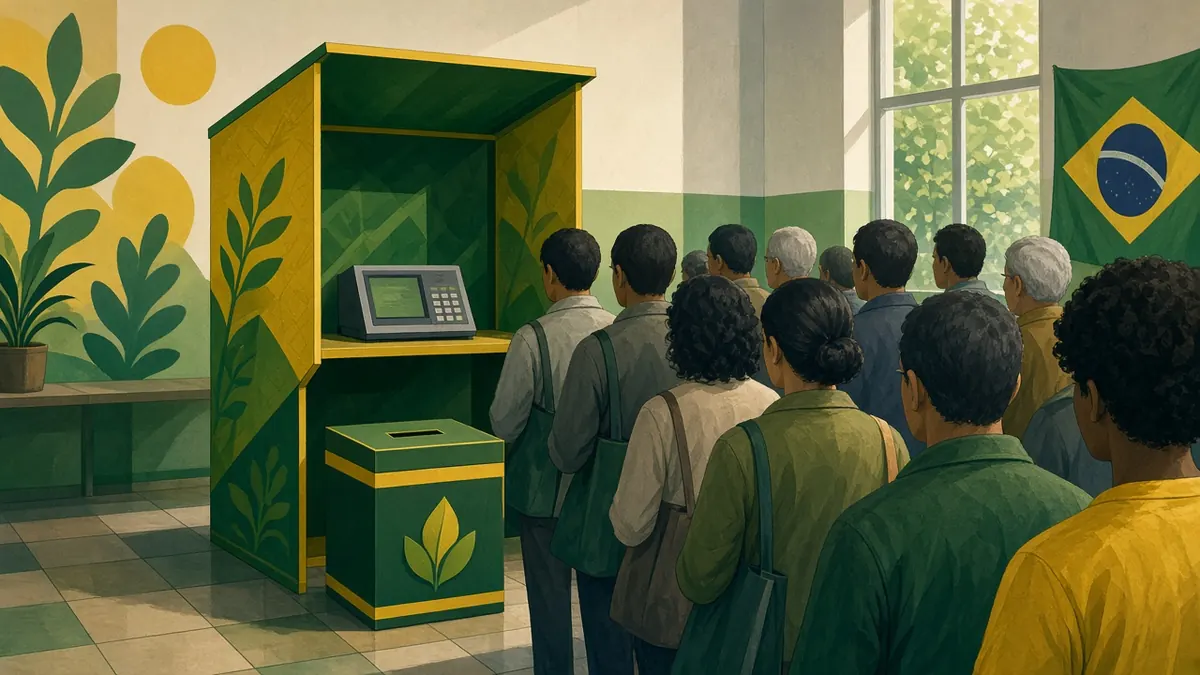
Luiz Inácio Lula da Silva has won Brazil’s presidential election. With all votes counted in Sunday’s runoff, Brazil’s Superior Electoral Court said the left-wing incumbent took 51.79% of the valid vote to 48.21% for right-wing Senator Flávio Bolsonaro, the BBC reported.
The win gives Lula a fourth term, and it came from behind. Bolsonaro, the eldest son of former President Jair Bolsonaro, had finished first in the Oct. 4 first round. According to Reuters, Lula is the first candidate since Brazil returned to democracy in the 1980s to win the presidency after finishing second in the first round.
Bolsonaro has not conceded. He told supporters in Brasília that he would seek to have the election annulled.
Brazil election results
The Guardian’s tracker, based on official figures with 100% of districts counted:
| Candidate | Party | Share | Votes |
|---|---|---|---|
| Luiz Inácio Lula da Silva | Workers’ Party (PT) | 51.79% | 64,256,232 |
| Flávio Bolsonaro | Liberal Party (PL) | 48.21% | 59,826,041 |
That is a margin of about 4.4 million votes. Reuters noted that it is more than twice the margin by which Lula beat Jair Bolsonaro in 2022.
Why Bolsonaro wants the vote annulled
The dispute centers on a Supreme Court ruling on Sunday. Justice Cristiano Zanin extended voting by two hours at polling stations that were still open, after Lula’s campaign cited public transportation problems in parts of Bahia state.
Flávio Bolsonaro called the extension “unacceptable,” Reuters reported, and the BBC said he described it as “inexplicable.” Both outlets point out that his own campaign had also asked for more voting time, citing heavy rain in parts of southern Brazil.
Analysts told Reuters that the size of the margin, and the fact that both sides asked for the extension, make an annulment unlikely. Mario Braga, a Latin America analyst at the risk consultancy RANE, said there could be right-wing protests in the coming days, but “it’s very improbable that it will lead to the reversal of the result.”
Reuters noted the echo of 2022. Jair Bolsonaro never accepted his loss to Lula that year. He is now serving a 27-year prison sentence for plotting a coup to stay in power, according to Reuters and The Guardian.
How Lula turned it around
Few expected a comeback after the first round. The BBC said Lula’s campaign was revived by street demonstrations and a big social media push, and The Guardian described “massive, student-led anti-Bolsonaro protests” after Oct. 4.
Pollsters told Reuters that better-than-expected turnout powered the result. Lula leaned on his record, pointing to falling poverty and inequality. He also made late campaign pledges, including free nationwide weekend public transportation, which still needs approval from Congress, and a 15% increase to his signature welfare program.
“People today are choosing between change, with some apprehension, and a known path, which guarantees certain rights,” Leonardo Barreto, co-founder of the consultancy Think Policy, told Reuters.
What Lula faces in a fourth term
Lula’s new term begins on Jan. 5, 2027, according to the BBC. He turns 81 on Tuesday and would be 85 by the end of the term.
Governing will not be easy:
- A hostile Congress. The BBC says Lula will face the most right-wing Congress of Brazil’s democratic era. Bolsonaro’s Liberal Party made the biggest gains in the election.
- A divided country. More than 48% of voters backed Bolsonaro.
- Tension with Washington. The BBC reported that President Donald Trump did not directly endorse Bolsonaro but that his administration would have preferred a conservative in power. Reuters said Lula’s win denies Trump a major addition to a growing bloc of friendly right-wing governments in Latin America.
- Market jitters. Reuters reported that a Tokyo-listed fund tracking Brazil’s Bovespa stock index fell nearly 15% in Asian trading after the result.
Environmental groups welcomed the outcome, the BBC said. They had feared a Bolsonaro government would loosen protections for the Amazon.
How the world reacted
Leaders across the region congratulated Lula, Al Jazeera reported. Mexican President Claudia Sheinbaum wrote, “Long live democracy, the people of Brazil won.” Canadian Prime Minister Mark Carney, Chilean President José Antonio Kast and Peruvian President Keiko Fujimori also sent congratulations.
In the U.S., reactions split along party lines. Sen. Bernie Sanders praised Lula’s “extraordinary re-election victory.” Donald Trump Jr. criticized the voting extension, saying the American press would “lose their minds” if a conservative government had done the same.
FAQ
Who won the Brazil election 2026?
Luiz Inácio Lula da Silva, with 51.79% of the valid vote.
Did Flávio Bolsonaro concede?
No. He said he would seek to annul the election over the two-hour voting extension.
When does Lula’s new term start?
Jan. 5, 2027, according to the BBC.
Can the result be overturned?
Analysts cited by Reuters called that very unlikely, given the margin and the fact that both campaigns requested more voting time.
Earlier coverage: Lula vs. Flávio Bolsonaro: Brazil counts runoff votes after a last-minute extension of polling hours (Oct 25)
Related topics
Sources
- Lula wins in Brazil but faces hostile Congress and divided country — BBC News
- Brazil election 2026: Full second round results as Lula wins comeback against Flávio Bolsonaro — The Guardian
- Flavio Bolsonaro refuses to concede defeat to Lula, says he will seek annulment of Brazil vote — Reuters via CNBC-TV18
- World reacts to Lula's victory in Brazil's presidential election — Al Jazeera