#17 trendingGuy Fawkes Night
Guy Fawkes Night Explained: Bonfire Night, the Gunpowder Plot and Why Britain Marks Nov. 5
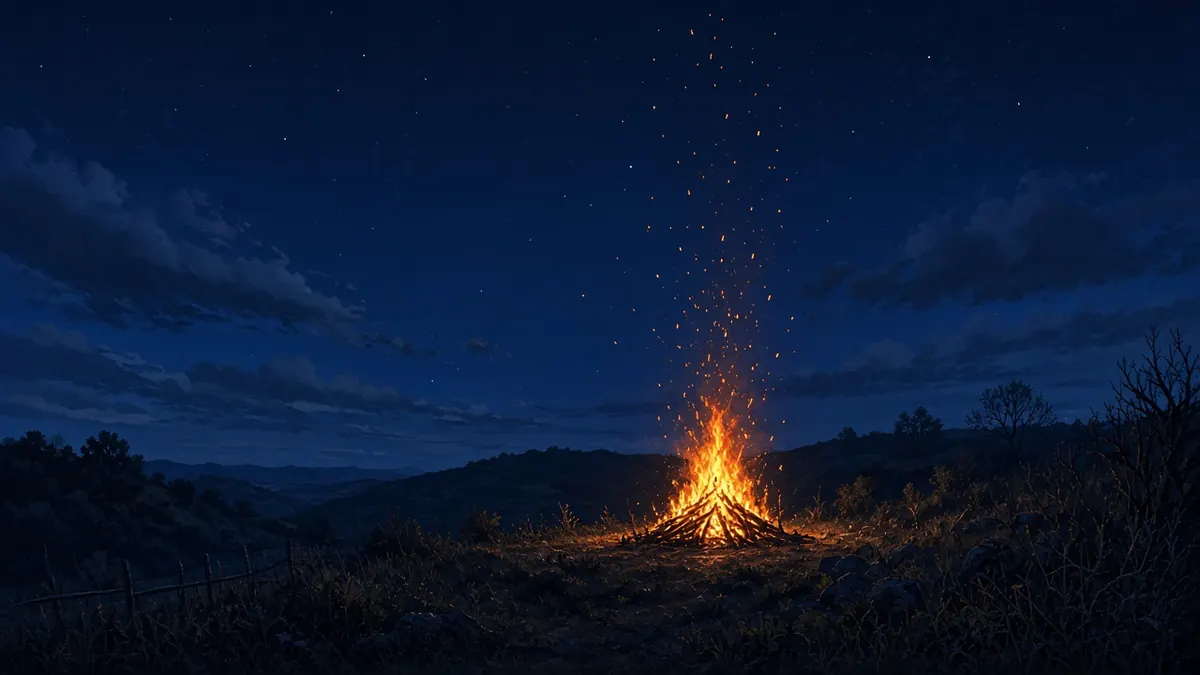
Every Nov. 5, communities across the United Kingdom light bonfires, set off fireworks and, in some places, burn straw-stuffed effigies known as “Guys.” The holiday is called Guy Fawkes Night or Bonfire Night. For American readers who mainly know the date from the rhyme “Remember, remember! The fifth of November,” here is what the tradition commemorates and how it evolved.
What was the Gunpowder Plot?
The Gunpowder Plot was a failed attempt to kill King James I of England and destroy the House of Lords during the Opening of Parliament in November 1605, according to Royal Museums Greenwich and PBS.
The conspiracy was led by Robert Catesby, a devout English Catholic who hoped to overturn Protestant rule. English Catholics had expected more tolerance when James succeeded Elizabeth I; those hopes faded after the king denounced the Catholic faith in early 1604 and ordered Jesuit and Catholic priests to leave the realm, Royal Museums Greenwich said.
Catesby’s circle planned to blow up Parliament, kill the king and his heir, and place James’s young daughter, Princess Elizabeth, on the throne as a Catholic-aligned puppet monarch. English Heritage notes the plotters also hoped Spain’s earlier war with England might still deliver a Catholic restoration; a peace treaty with Spain undercut that hope and hardened their resolve.
Who was Guy Fawkes?
Guy Fawkes was not the ringleader. He was a professional soldier who had fought for Catholic Spain against Protestant forces in the Netherlands, which gave him experience with explosives, PBS and English Heritage say. Catesby recruited him to mind the gunpowder stash under Parliament and light the fuse.
Fawkes often used the Italianized name Guido, the name under which he later signed his confession, English Heritage notes. In the plot he posed as “John Johnson,” a servant of fellow conspirator Thomas Percy.
Thirteen men eventually joined the conspiracy, including Thomas Wintour, Jack Wright, Thomas Percy, and later Francis Tresham and Sir Everard Digby, among others, according to Royal Museums Greenwich.
How the plot was foiled
In March 1605 the plotters rented a cellar directly beneath the House of Lords and moved in dozens of barrels of gunpowder—36 barrels in the accounts cited by PBS, Royal Museums Greenwich and English Heritage.
The scheme began to unravel after Lord Monteagle received an anonymous warning letter on Oct. 26, 1605, telling him not to attend the Opening of Parliament. Monteagle took the letter to Robert Cecil, the king’s chief minister. Despite the leak, Catesby pressed ahead, believing the warning was too vague, English Heritage and Royal Museums Greenwich report.
On Nov. 4, men loyal to the king checked Parliament’s vaults and found a suspicious pile of firewood and a man who called himself John Johnson. In the early hours of Nov. 5, a second sweep found Fawkes with fuses and matches; the gunpowder was discovered and he was arrested.
Under torture, Fawkes named his fellow plotters. Some were killed while fleeing; the surviving conspirators were tried for treason in January 1606 and executed by hanging, drawing and quartering. Fawkes and several others died at the Old Palace Yard at Westminster on Jan. 31, 1606, Royal Museums Greenwich says.
Why Britain still marks Nov. 5
Parliament soon required an annual day of thanksgiving for the plot’s failure. An Act for a Public Thanksgiving made church attendance on Nov. 5 compulsory for a time, Royal Museums Greenwich notes. Bonfires and later fireworks grew out of that official remembrance.
The tone was once harshly anti-Catholic. English Heritage says early effigies burned on bonfires were often of the pope; only in the 1800s did the familiar “Guy” figure become standard. Over the 19th and 20th centuries the holiday largely shed that sectarian edge and became a communal autumn festival of fireworks, sparklers, toffee apples and, in some places, traditional foods such as parkin cake, PBS reports.
A quieter institutional echo remains: before a State Opening of Parliament, the Yeomen of the Guard still ceremonially inspect the cellars of Westminster for explosives, Royal Museums Greenwich says—a ritual rooted in 1605.
How Guy Fawkes Night is celebrated today
Modern Bonfire Night centers on public fireworks displays and community bonfires, often organized by local councils or charities. Some events still burn a “Guy.” The date falls in early November, so celebrations are outdoor, cold-weather gatherings rather than a day off work in the American sense; Nov. 5 is not a U.K. bank holiday.
For U.S. audiences, the story is less about current politics than about a 400-year-old failed coup that became a national folklore date—and about a secondary plotter whose name outlasted the mastermind’s in popular memory.
FAQ
Is Guy Fawkes Night the same as Bonfire Night?
Yes. Both names refer to the Nov. 5 commemorations of the foiled Gunpowder Plot; “Bonfire Night” emphasizes the modern fireworks-and-bonfire celebration.
Was Guy Fawkes the leader of the plot?
No. Robert Catesby organized the conspiracy. Fawkes was the explosives specialist tasked with lighting the fuse.
Why do people say “Remember, remember the fifth of November”?
It comes from a long-lived English rhyme recalling the Gunpowder Plot’s failure on Nov. 5, 1605, the date Fawkes was caught beneath Parliament.
Related topics
Sources
- Gunpowder Plot: what is the history behind Bonfire Night? — Royal Museums Greenwich
- Guy Fawkes Day Explained — PBS MASTERPIECE
- 5 things you might not know: The Real Story of Bonfire Night — English Heritage