#23 trendingMauritian Trapdoor Spider
Scientists name the Mauritian tidal trapdoor spider, a new species that lives underwater at high tide
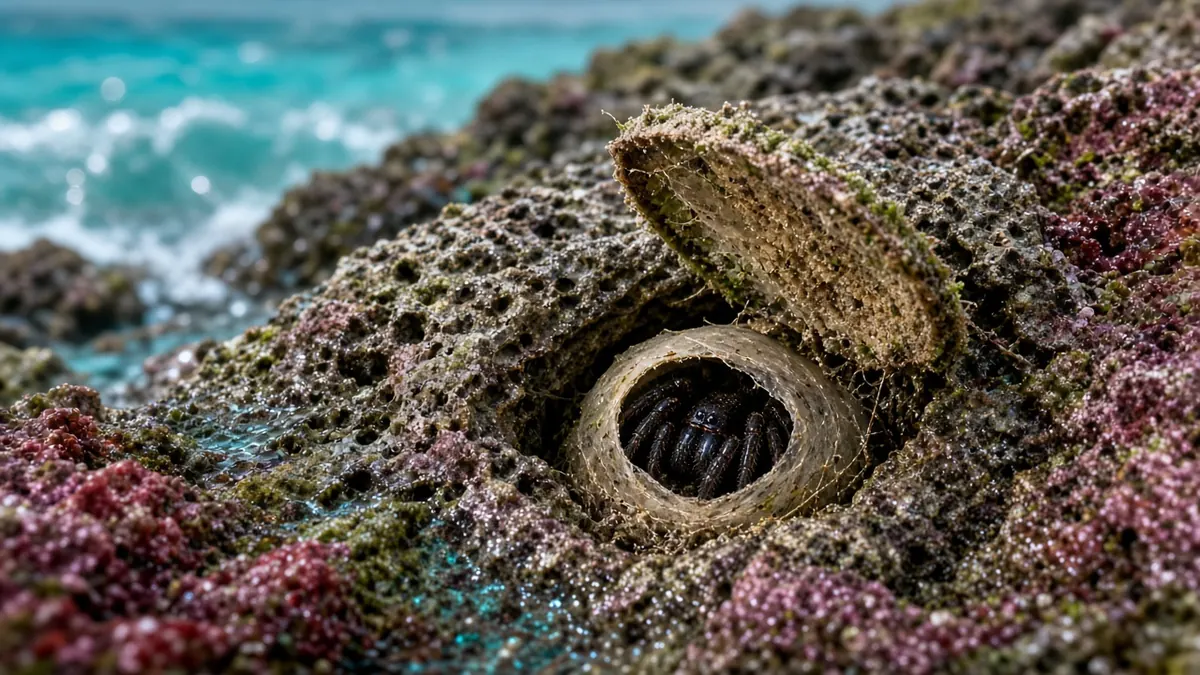
Scientists have formally described a new spider species that spends part of every day underwater. The Mauritian tidal trapdoor spider, Idioctis marevallum, lives in the intertidal zone of two tiny islands off southeast Mauritius, where its home is fully submerged at high tide or pounded by waves, according to Durrell Wildlife Conservation Trust, which helped make the discovery.
How does the Mauritian tidal trapdoor spider survive the tide?
Rather than digging its own burrow, the spider moves into tubes in coralline bedrock that Durrell says were likely created by worms and mollusks thousands of years ago. It seals the entrance with a trapdoor made of silk, sand and algae that blends almost perfectly into the surrounding rock. Reporting on the study describes the silk as waterproof, which helps the spider ride out submersion.
Where was it found?
The spider was first spotted in 2023 on Ilot Vacoas, a one-hectare islet off the southeast coast of Mauritius, during conservation work under the Mauritius Island Restoration Programme. It has since also been found on Ile aux Fouquets, another small nearby island. The name marevallum comes from the Latin for “sea wall.”
Entomologist Max Tercel, who led the survey team that found it, said spotting the spider’s legs extending from a crevice by headlamp left him “completely stunned.” Durrell’s Nik Cole said the team first wondered whether it was a species described in 1892 and seen only once, before it proved to be new to science.
Why does this discovery matter?
Trapdoor spiders belong to the mygalomorphs, the same group as tarantulas, and are usually found in forests and grasslands, not on wave-washed rock. The wider study, published in the journal Arachnology and led by arachnologist Danniella Sherwood, also added species never before recorded in Mauritius, raising the island’s known spider diversity by more than 25%, according to Durrell.
Vikash Tatayah of the Mauritian Wildlife Foundation said the find “supports the urgent need to preserve and restore as many nooks and crannies in the country” as possible, since they may still hide undiscovered species.
FAQ
What is the scientific name?
Idioctis marevallum.
Is the spider dangerous?
The sources describing the species do not suggest any risk to people; it lives only on two small islets.
Sources
- New species of trapdoor spider identified in Mauritius — Durrell Wildlife Conservation Trust
- New species of trapdoor spider discovered on islands off Mauritius — The Washington Times
- Contributions to the knowledge of Mauritian araneofauna (Arachnology) — Arachnology journal