#18 trendingSpain Train Crash
Spain train crash: at least 64 dead after high-speed AVE slams into stopped Iryo train near Urda, Toledo
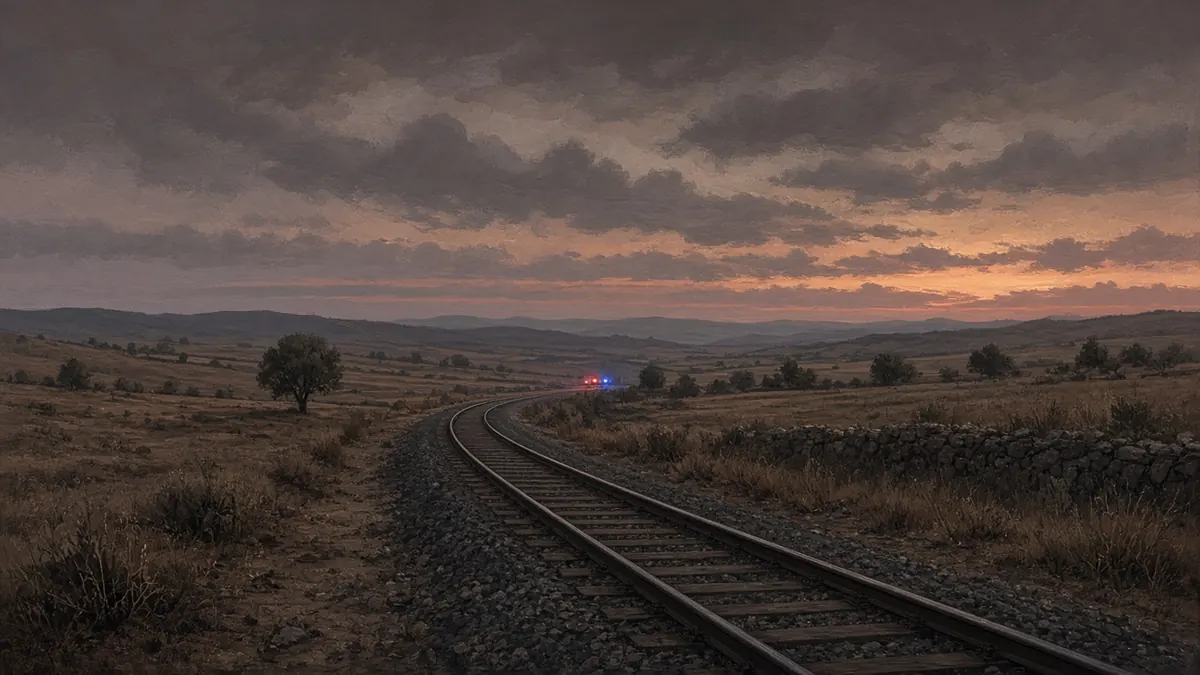
At least 64 people were killed Wednesday morning, Oct. 28, when a high-speed train operated by Spain’s state rail company Renfe slammed into the back of a stopped train run by private operator Iryo near the town of Urda, in the province of Toledo in central Spain. The death toll was confirmed by the regional government of Castilla-La Mancha, according to the Associated Press and Spanish broadcaster RTVE.
The figures are provisional. Spanish outlet ABC reported that rescue teams were still working through the damaged Iryo cars, and the toll could change as that work continues.
AP noted that it is Spain’s second deadly high-speed rail accident this year.
What happened in the Spain train crash?
Both trains were traveling on the high-speed line from Madrid toward Seville. According to Sur in English:
- Renfe’s AVE 2080 left Madrid’s Puerta de Atocha station at 8 a.m. local time, bound for Seville-Santa Justa.
- Iryo’s train 6076 was traveling ahead of it on the same route.
- The AVE hit the rear of the Iryo train as it entered the Urda station area.
Reports differ slightly on the exact minute of impact: RTVE put it at 8:53 a.m., Sur in English at 8:54 a.m.
High-speed service between Madrid and Andalusia was suspended after the crash, RTVE reported.
How many people died, and how many were hurt?
At least 64 people died, according to the Castilla-La Mancha regional government. The injury count has varied as officials updated it through the day:
- AP reported that 58 people needed medical treatment, citing the regional government.
- ABC later reported 115 injured.
- Other Spanish reports cited different interim numbers.
The differences likely reflect updates over time, but officials had not released a final count as of this writing.
Passenger totals also vary slightly by outlet. RTVE reported 393 passengers on the AVE and 147 on the Iryo, while Sur in English put the numbers at 397 and 146.
What caused the train crash in Spain?
The official cause has not been determined, and investigators said it is too early to say. Early accounts focus on a signaling failure and the orders that followed:
- Signal system outage: Around 8:30 a.m., the LZB system, which continuously monitors train speed and position and can brake automatically, failed in the Urda area, Sur in English reported. Transport Minister Óscar Puente blamed a computer communication fault, according to RTVE. Trains in the affected stretch stopped automatically.
- Traffic resumed: Trains were then authorized to resume under a backup trackside signal system known as BSL, according to Sur in English.
- Minister’s account: Puente said the control center decided to let the train resume normally “despite a red signal” while the Iryo was still stopped on the track, RTVE reported (translated). He called the conditions “incomprehensible” (translated).
- Renfe’s account: Renfe says its AVE “continued its journey as instructed,” and that it does not know why the Iryo stayed stopped, per Sur in English.
- Infrastructure manager: Sources at Adif, which runs the rail network and its control centers, told Sur in English that “it is too early to know the cause.” Possible human error is one of the main lines of inquiry, the Transport Ministry said.
These accounts come from the companies and the government, and some of them point in different directions. The formal investigation is expected to determine what the signals showed, what instructions each driver received and whether the safety systems worked as designed.
Where is Urda, Spain?
Urda is a small town in Toledo province, in the Castilla-La Mancha region south of Madrid, on the high-speed rail line between Madrid and Seville that both trains were using.
FAQ
Which trains were involved in the Toledo train crash?
A Renfe AVE high-speed train (a Series 103, or Velaro) and an Iryo train (a Frecciarossa ETR1000 model), according to Sur in English, citing the Transport Ministry.
Is the death toll final?
No. At least 64 deaths have been confirmed, and the regional government’s count may change.
Is the Madrid-Seville high-speed line open?
High-speed traffic between Madrid and Andalusia was halted after the crash, according to RTVE. Travelers should check with their rail operator.
Related topics
Sources
- At least 64 dead in Spain after one high-speed train slams into another — AP News
- Toledo train crash update: LZB failure and stationary Iryo preceded collision — Sur in English
- Accidente de tren en Toledo: Qué se sabe, causas y heridos — RTVE
- Al menos 64 muertos y 115 heridos en el choque entre un Iryo y un AVE en Urda — ABC