#24 trendingNicholas McKelvey
Navy Moves to Discharge Nicholas McKelvey, Sailor Who Jumped From USS Abraham Lincoln
This story discusses a suicide attempt. If you or someone you know is in crisis, call or text 988 to reach the Suicide and Crisis Lifeline.
The U.S. Navy has moved to discharge Nicholas McKelvey, a 19-year-old airman who jumped from the flight deck of the aircraft carrier USS Abraham Lincoln into the Arabian Sea in August, after accusing him of “malingering,” or faking a mental health crisis to end his deployment. That is according to his wife, Samantha Larry, who spoke to The New York Times. The Times reported on Oct. 29 that the Navy took the step on Thursday.
The discharge is a general discharge under honorable conditions. Larry said that classification makes her husband ineligible for G.I. Bill education assistance, a benefit the family had been counting on as a path to college.
Who is Nicholas McKelvey?
McKelvey is an aviation mechanic in a helicopter squadron who joined the Navy in 2024, according to the Times. He had been aboard the Lincoln for 255 days when he jumped, working 12-hour shifts on the flight deck during the war with Iran. He missed the birth of his daughter, his in-laws were battling cancer, and food aboard the carrier was in short supply, the Times reported.
He and Larry, both 19, have a 3-year-old son and an 8-month-old daughter. The family plans to return to their hometown of Jacksonville, Florida.
“I didn’t want to be there anymore,” McKelvey told the Times in his first public interview. “If I was going to die because of it, then that’s just how it is.”
What happened aboard the USS Lincoln?
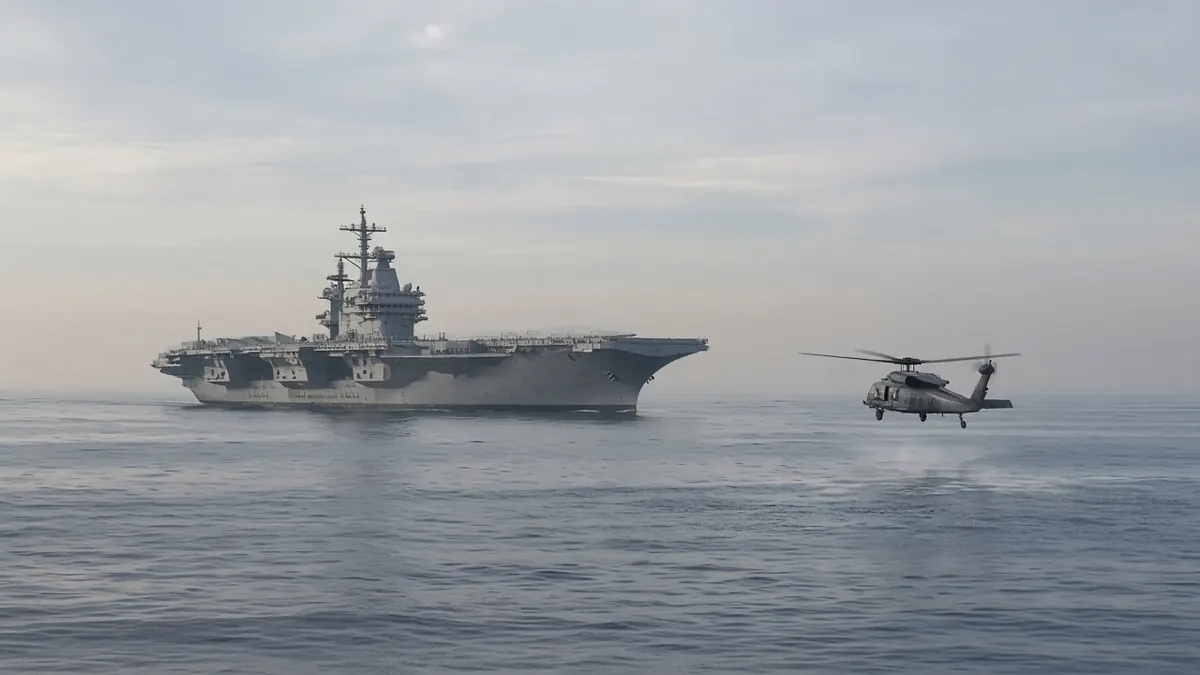
According to Navy records reviewed by the Times, McKelvey sprinted along the flight deck at about 10 a.m. on Aug. 3 and jumped 67 feet into the sea. A helicopter crew rescued him, and he was back aboard about 50 minutes later.
A report by the ship’s officer of the deck, described by the Times, struck a skeptical note. It said his “motives are undetermined” but that “the conditions in which he jumped appear suspect,” noting that he jumped in daylight while the ship was moving slowly, wore his flotation “float coat,” and “almost immediately waved for help.” McKelvey disputes that last point and says he was swimming away from the ship. The same report also acknowledged, “This has been a difficult deployment.”
McKelvey said he had sought mental health care in late June and was directed to a chaplain, according to the Times. In a July text to his wife, first reported by MS NOW without naming him, he wrote, “i think the boat is finally getting to me.”
Why is the Navy discharging him?
In August, MS NOW reported that the sailor faced nonjudicial punishment under the Uniform Code of Military Justice for malingering (Article 83) and absence without leave (Article 86). The Times later reported that the absence charge was replaced with a charge of jumping from a vessel, and that a commanding officer found him guilty at a hearing last month. Larry said the officer noted that the jump endangered the entire ship.
The Navy did not respond directly to questions about McKelvey’s case, the Times said. A Navy spokesman said carriers have “a multidisciplinary team of mental health resources.” In August, a Navy official told MS NOW that “asking for help is a sign of strength” and that mental health resources are available to sailors around the clock.
Why the case is drawing attention
The Lincoln returned to San Diego this month after a near-record 322-day deployment, according to the Times, and became a symbol of food shortages and mental health strain aboard Navy ships during the war. A Navy letter to lawmakers cited by the Times counted eight suicide attempts in the Lincoln strike group during the deployment.
Experts interviewed by the Times were divided. Some said the disciplinary response was legally justified and relatively lenient. Others said the Navy could have focused on treatment or a medical discharge that would have preserved his benefits. “You don’t need to punish it. You need to treat it,” said Rachel VanLandingham, a former Air Force lawyer and a professor at Southwestern Law School.
Rep. Sara Jacobs, D-Calif., whose district includes the Lincoln’s home port, told MS NOW in August that “no one should be punished for getting the mental health care they need.”
FAQ
Does a general discharge mean McKelvey loses the G.I. Bill?
According to his wife, yes. She told the Times the general discharge under honorable conditions makes him ineligible for G.I. Bill education assistance and that the family expects to take out student loans instead.
Has the Navy commented on the sailor’s case?
Not directly. The Navy pointed to the mental health resources available aboard carriers but did not answer specific questions about McKelvey, according to the Times.
Related topics
Sources
- A Sailor Jumped From the U.S.S. Lincoln. The Navy Punished Him. — The New York Times (via DNYUZ)
- Navy moves to discharge 19-year-old airman who jumped from U.S.S. Lincoln — Quartz
- Navy sailor who jumped off USS Lincoln faces disciplinary charges — MS NOW