#23 trendingClaudio Grossi
Claudio Grossi's 'miracle wheat': How forgotten attic seeds revived an ancient grain in Italy
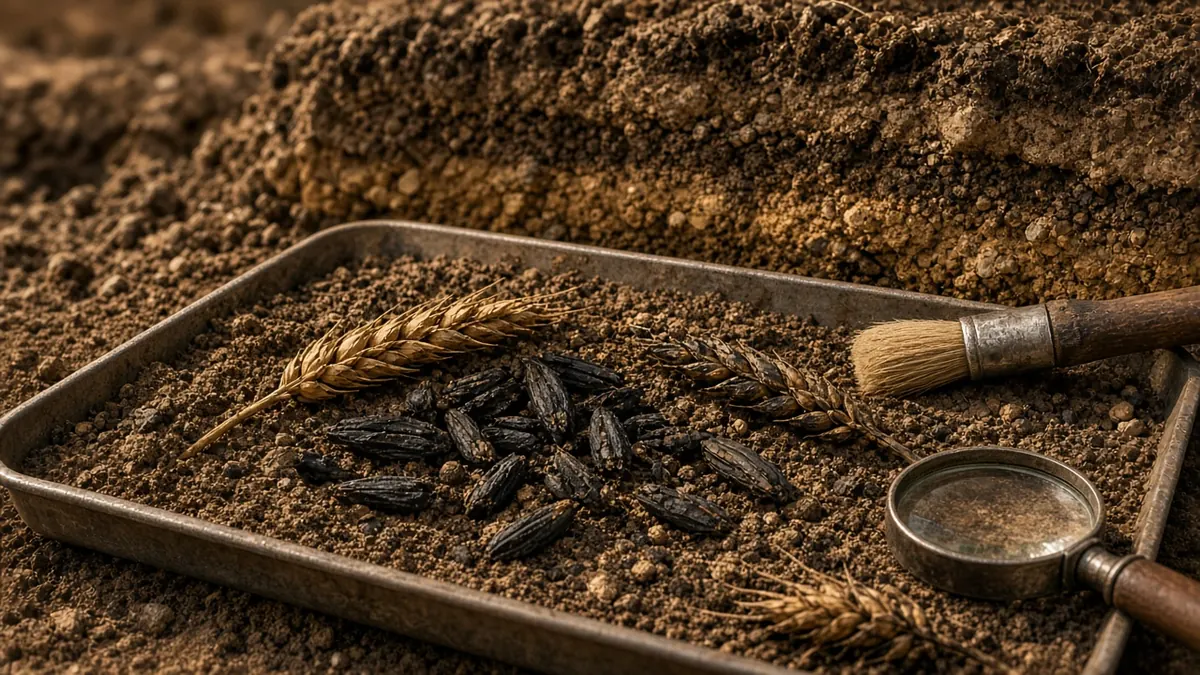
A sack of forgotten seeds, a pile of manure and a wheat plant with seven ears on one stalk: that’s the story behind Claudio Grossi’s “miracle wheat,” an ancient grain that a farmer near Parma, Italy, brought back into cultivation. The tale is drawing fresh attention thanks to a feature in Smithsonian magazine’s November 2026 issue.
It’s worth being clear about the timeline. This isn’t a brand-new lab finding. According to Smithsonian, Grossi found the seeds in the early 1990s, and the grain has been grown and sold as flour in Italy for years. What’s new is the wider attention to the story and to why old wheat varieties may matter as the climate changes.
What did Claudio Grossi discover?
Smithsonian reports that Grossi, then about 40 and a lifelong grain farmer, was cleaning his attic when he found an old sack of seeds he couldn’t identify. He believed it had been left by a relative who started the family farm around 1915. The article calls that relative his great-grandfather in one place and his grandfather in another, so the exact family link isn’t fully clear.
The seeds looked so dry and cracked that Grossi doubted they would grow. He shook them into a manure pile and forgot about them. Several kinds of wheat sprouted. One stood out:
- Height: about six feet tall, roughly twice the height of commercial wheat.
- Seven ears per stalk: one long ear with six shorter ones bunched around it, where the wheat he knew grew only one.
- Bigger, colorful kernels: yellow, black, red, white and even green, sometimes on the same stem.
Grossi told the magazine he first thought it was “a freak of nature.”
Why is it called “miracle wheat”?
Grossi, a practicing Catholic, linked the plant to the passage in Genesis in which Pharaoh dreams of “seven ears of grain” on one stalk. He named it grano del miracolo, or “miracle grain,” according to Smithsonian.
What kind of wheat is it?
A University of Parma food science student, Beniamino Perobelli, studied the grain for his undergraduate thesis, working with the lab of Teofilo Vamerali, Smithsonian reports. They identified it as Triticum turgidum, known in English as poulard wheat. It originally evolved in the region that is now Turkey, Egypt and nearby Mediterranean countries, and it was once grown in Italy before farmers switched to higher-yield varieties.
The researchers found that, compared with modern wheat, it was:
- richer in phosphorus and iron
- lower in gluten
- high in the amino acids lysine and tryptophan, with more arginine
This is a summary of reported findings, not nutrition or medical advice. Lower gluten is not the same as gluten-free.
Why could ancient grains matter for farming now?
According to Smithsonian, Grossi found the grain hardier than commercial wheat. It held up better in drought and grew tall enough to shade out weeds, and he says it didn’t need fertilizer or herbicides.
Francesco Sottile, a University of Palermo expert on agricultural biodiversity, told the magazine that relying on a small number of wheat varieties leaves farming exposed to droughts, heat, disease and pests. He said that during a severe 2024 drought in Sicily, many commercial wheat growers gave up on their fields, while most farmers growing ancient grains were still able to harvest.
There are trade-offs. The tall stems can be knocked flat by wind, rain and hail before the grain ripens. Grossi works around that by planting it alongside shorter wheat for support. Bread made from it also rose poorly at first. Grossi and a local baker solved this with smaller batches, taller wicker baskets and less kneading.
How did the wheat reach bakeries?
Grossi persuaded Parma-based mill Molino Grassi to sell the flour to artisanal bakers, then to restaurants and shoppers, Smithsonian reports. On its website, Molino Grassi says it began working with Grossi in 2010 to bring the “Miracolo” grain back, and that the partnership led to its trademarked Miracolo flour and to reviving other early 20th-century varieties.
What’s still unclear
The magazine’s account relies largely on Grossi’s own recollections of the 1990s find, and the age of the seeds isn’t known. The nutrition results come from a student thesis described in the article. They are not presented as a large peer-reviewed trial. Claims about drought resilience are reported from farmers’ experience, not from field studies cited in the piece.
FAQ
Who is Claudio Grossi?
He’s a grain farmer near Parma, Italy, who revived an ancient wheat from seeds found in his attic.
What is grano del miracolo?
It means “miracle grain.” It’s the name Grossi gave to a poulard wheat (Triticum turgidum) that grows up to seven ears per stalk.
Can you buy it?
Molino Grassi sells Miracolo-branded ancient grain flour. Smithsonian says it has reached buyers in Italy and abroad.
Is it gluten-free?
No. Researchers found it has less gluten than modern wheat, but it still contains gluten.
Sources
- An Italian Farmer Found Some Unknown Seeds in His Attic and, With Nothing to Lose, Planted Them. The Result Was Almost Biblical — Smithsonian Magazine
- Miracolo grain by Molino Grassi — Molino Grassi